Non-Toxic Hand Soaps With Clean Ingredients Only (2026 Guide)
Updated: Aug 16
Looking for truly non-toxic hand soap? This guide breaks down the safest ingredients, what to avoid, and whether glucoside or castile-based soaps are best for your skin type.
As an Amazon Associate & affiliate, I may earn revenue at no extra cost to you.
How To Choose a Non-Toxic Hand Soap That's Right For You
Glucoside-Based Non-Toxic Hand Soaps
Glucoside-based hand soaps are made using sugar-derived surfactants, typically sourced from coconut and fruit sugars. These are considered some of the gentlest cleansing agents available.
Unlike harsher surfactants, glucosides cleanse without significantly disrupting the skin barrier. This makes them a great option for those with dry, sensitive, or easily irritated skin.
Why people love them:
Very gentle and non-stripping
Helps maintain skin hydration
Ideal for frequent hand washing
Better suited for sensitive skin types
Common ingredients you’ll see:
Decyl glucoside
Coco glucoside
Lauryl glucoside
Castile-Based Non-Toxic Hand Soaps
Castile soap is made through a process called saponification, where oils (like olive or coconut oil) are combined with a strong alkali to create soap.
While often marketed as natural and non-toxic, castile soap has a higher pH, which can disrupt the skin’s natural barrier over time—especially with frequent use.
Things to consider:
Can feel more “squeaky clean” (which may mean more stripping)
Higher pH may dry out skin
Not ideal for already dry or sensitive skin
That said, some people still enjoy castile soaps, especially those with more resilient or oily skin.
Glucoside - Based Non-Toxic Hand Soaps

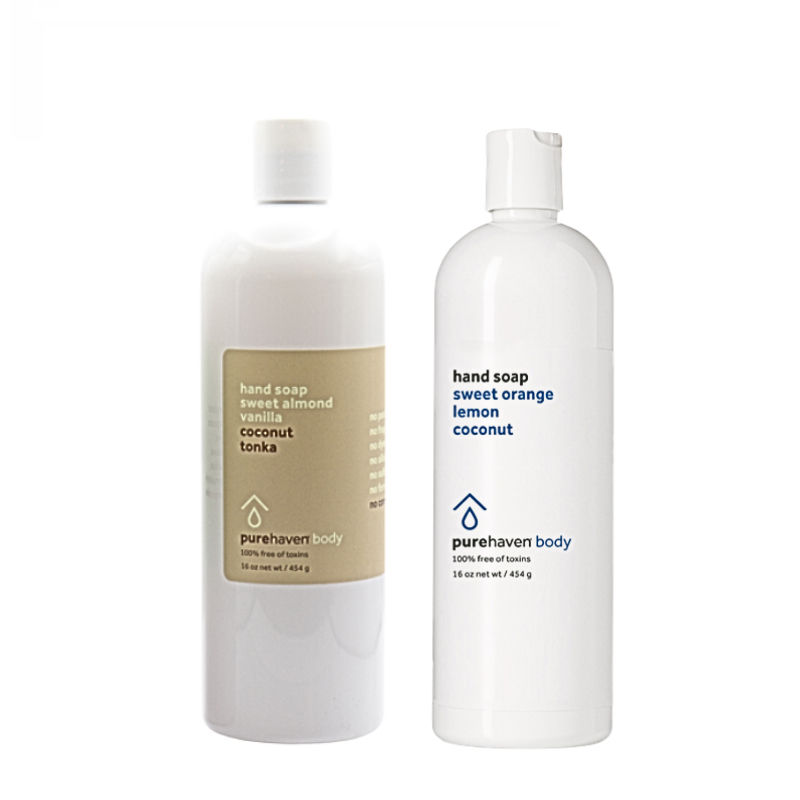
Castile - Based Non-Toxic Hand Soaps


Ingredients to Avoid in Hand Soaps
When choosing a non-toxic hand soap, ingredient quality matters more than marketing claims. Here are some commonly used ingredients many people choose to avoid:
Fragrance (Parfum)
“Fragrance” can be a catch-all term for hundreds of undisclosed chemicals, including potential allergens and endocrine disruptors.
Some formulations may also contain phthalates, which are used to help scents last longer.
Sodium Lauryl Sulfate (SLS) & Sodium Laureth Sulfate (SLES)
These are strong cleansing agents that create a rich lather but can be very harsh on the skin.
SLS is known to strip natural oils and can cause irritation
SLES is ethoxylated, meaning it undergoes a process that may introduce contamination concerns
Why ethoxylation matters:
Ethoxylated ingredients can be contaminated with:
1,4-dioxane (a probable carcinogen)
Ethylene oxide (a known carcinogen used during processing)
Even though levels may be regulated, many people prefer to avoid these altogether.
Cocamidopropyl Betaine
Often used as a “gentler” alternative to sulfates, but it can still cause irritation in some individuals.
The concern here isn’t just the ingredient itself, but impurities from the manufacturing process, which have been linked to allergic reactions.
Artificial Preservatives (Certain Types)
Some preservatives can be more controversial depending on formulation, including:
Formaldehyde-releasing preservatives (like DMDM hydantoin)
Methylisothiazolinone (MI) and methylchloroisothiazolinone (MCI), known for skin sensitization
PEGs (Polyethylene Glycols)
PEG compounds are also ethoxylated, which brings similar concerns:
Potential contamination with 1,4-dioxane
Can increase skin permeability, allowing other chemicals to absorb more easily
How to Choose the Right Non-Toxic Hand Soap
If you have:
Dry or sensitive skin → go with glucoside-based formulas
Normal or oily skin → you may tolerate castile soaps better
Look for:
Transparent ingredient lists
No synthetic fragrance
Gentle, non-ethoxylated surfactants

Comments